DRONEXA America Framework Portfolio
The overarching structure connecting research, educational design, implementation, evaluation, continuous improvement, and future adaptation.
DRONEXA America Resource Portfolio
A developing collection of frameworks, educator guidance, implementation tools, and planning resources designed to translate research into practical support for drone-integrated STEM education.
Resource Development
DRONEXA America resources are being developed to address different dimensions of educational UAS implementation, including instructional planning, educator preparation, accessibility, safety, ethics, institutional practice, evaluation, and workforce readiness.
The resources are intended to complement one another and to evolve through professional review, implementation experience, stakeholder feedback, and evidence.
Featured Resources
The overarching structure connecting research, educational design, implementation, evaluation, continuous improvement, and future adaptation.
Practical educator guidance for planning and facilitating curriculum-aligned drone STEM experiences, including instructional preparation, mission design, safety, assessment, and equipment considerations.
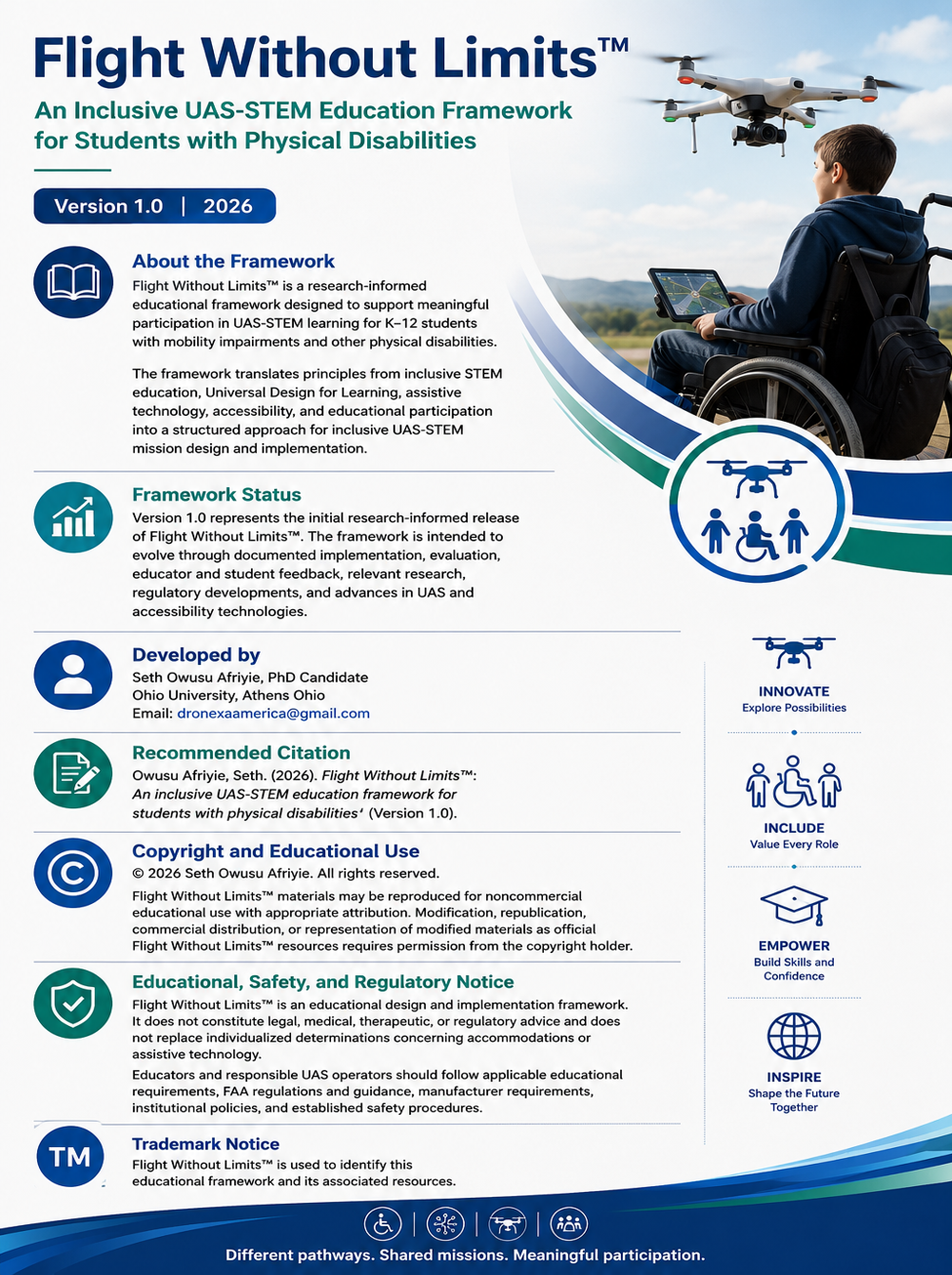
A framework focused on meaningful participation of students with mobility impairments and other physical accessibility needs through accessible design, varied mission roles, adaptations, assistive supports, and inclusive evaluation.
Explore the framework overview →Developing organizational guidance structured around safety, ethics, instruction, access, institutional responsibility, and workforce readiness.
A proposed implementation and evidence-development model for applying selected DRONEXA components in an authentic educational environment and using the resulting evidence for refinement.
Explore the pilot overview →For Educators
Clarify learning goals, standards alignment, mission structure, equipment needs, and student roles.
Use drones as purposeful learning tools within hands-on, inquiry-oriented, and applied STEM experiences.
Connect mission activities with formative and summative evidence of student learning.
Consider scheduling, facilities, equipment, staffing, safety, accessibility, and practical constraints.
Accessibility Across the Portfolio
Accessibility is not confined to a single resource. Flight Without Limits™ provides the most detailed inclusive UAS-STEM framework, while the broader DRONEXA portfolio is being developed to incorporate access and meaningful participation into planning, instruction, safety, assessment, and implementation.
Resource Development Cycle
Current Availability
The resources described on this page are at different stages of development and are not being represented as final or universally validated materials. Public summaries are provided to explain the scope and direction of the work while the fuller materials continue to be refined.
Additional downloadable resources, implementation tools, educator materials, and versioned documents may be made available as they reach appropriate stages of review and development.
Contribute Expertise
DRONEXA America welcomes constructive professional input from educators, researchers, accessibility and assistive-technology professionals, UAS practitioners, and other relevant stakeholders as its resources continue to develop.
Educate • Empower • Elevate
DRONEXA America is developing practical educational tools that can be strengthened through evidence, professional expertise, educator experience, and responsible implementation.